docketing@steinip.com

by Khloe McDonough
Animal breeding patents intersect with intellectual property (IP) law and agricultural practices. Animal breeding involves biological processes that occur over long periods through selective reproduction. Statutory law, including Title 35 of the United States Code[1] and landmark Supreme Court cases, distinguishes between naturally occurring biological phenomena and human-directed innovations, limiting patent protection to the latter[2]. 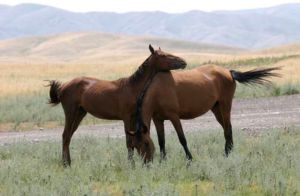
As a result, breeding has evolved to incorporate the molecular sciences, intending to enhance the production of meat, milk, and other economically valuable products. Investments in molecular biology, genetic sequencing, and cloning development require substantial investments, necessitating the need for additional protections to achieve sufficient returns on these investments[3].
Key milestone cases, the development of patents in animal genetics includes the 1980 Supreme Court Case Diamond v. Chakrabarty[4] case in 1980, which held that genetically engineered organisms are patentable and considered a product of human research and ingenuity, and not considered a natural phenomenon. Brenner v. Manson[5] clarified that applications must have practical functions to meet patent utility requirements, and not just “any invention not positively harmful to society” can qualify.
Notable patents related to animal breeding include U.S. patent 5,358,649, a patent used for diagnosing the HAL-1843 mutation associated with Porcine Stress Syndrome in swine and considered one of the first patents in animal breeding and genetics[6].
Today, patents cover DNA markers, genetics, tests, cloned animals, breeding methods, and measurement/identification tools.
However, as modern animal breeding has advanced, there have been concerns about the lack of broad research exemption and infringement from nonprofit or academic institutions, as well as economic issues related to exclusive licensing limiting innovation and blocking development.
Concerns about the effects of gene makers, selective breeding, and the use of transgenics and cloning on genetic diversity have been raised. However, although seemingly counterintuitive, patents may encourage genetic diversity by requiring the deposit of biological materials, or in other words, publishing their genetic materials in the public depository institution for others in the field of animal breeding to view.[7]
The Adai Horse Patents in Kazakhstan
The Adai horse is a traditional breed originating in western Kazakhstan. The Adai horse has been developed through long-term selective breeding in environmental conditions that favor endurance and adaptability[8]. The breed is not a result of genetic engineering or laboratory-based modifications but reflects established agricultural practices.
Kazakhstan has granted patent protection to the Adai horse under a legal classification referred to as a “breeding achievement.”[9] The protection applies to the Adai breed as well as to intra-breed types and specific breeding lines[10]. The legal framework evaluates breeding achievements based on criteria that include distinctiveness, uniformity, and stability[11].
Kazakhstan has linked the patenting of the Adai horse to broader policy objectives. The designation of the breed as a protected asset supports agricultural development, promotes international recognition, and contributes to the preservation of genetic resources[12]. The classification of the Adai horse as a national brand reflects the use of IP law as a policy instrument.
References
[Photo credit] np.kz
[1] 35 U.S.C. § 101 (2024)
[2] M.F. Rothschild, Intellectual Property Rights in Animal Breeding and Genetics, CTR. FOR AGRIC. & RURAL DEV., Iowa State Univ. (2002) [hereinafter Rothschild], https://www.card.iastate.edu/research/science-and-technology/papers/Max-patent_paper_for_france-final.pdf
[3] Id.
[4] Diamond v. Chakrabarty, 447 U.S. 303 (1980)
[5] Brenner v. Manson, 383 U.S. 519 (1966)
[6] Rothschild, supra note 1
[7] Id.
[8] Kazakhstan’s Adai Horses Gallop Towards International Recognition, Astana Times, https://astanatimes.com/.
[9] Kazakhstan Patents Adai Horse Breed as National Brand, QazMonitor (2024) [hereinafter QazMonitor], https://en.qazmonitor.com/news/2504/kazakhstan-patents-adai-horse-breed-as-national-brand.
[10] Id.
[11] Astana Times, supra note 6, at 2.
[12] QazMonitor, supra note 7, at 2.